
AllForms vs Miget
Side-by-side comparison to help you choose the right product.

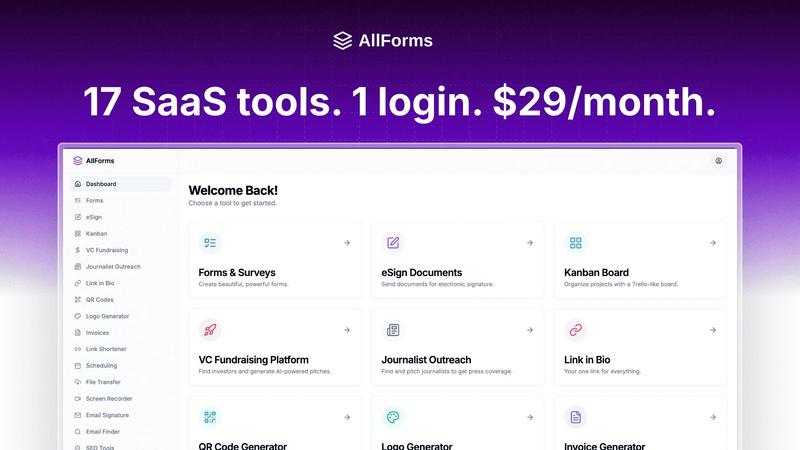
AllForms replaces 17 expensive SaaS tools for just $29 a month.
Last updated: March 1, 2026

Miget
Deploy unlimited services on one flat-rate plan.
Visual Comparison
AllForms
Miget
Overview
About AllForms
AllForms is the strategic growth engine for modern, scaling businesses. It is the definitive answer to the crippling inefficiency and exorbitant cost of tool sprawl. Founded on the principle of radical simplification, AllForms consolidates the core functionalities of 17+ expensive, standalone SaaS applications into a single, cohesive, and beautiful platform. It is built for founders, entrepreneurs, and growth-focused teams who are tired of managing a dozen subscriptions, juggling multiple logins, and wrestling with disconnected workflows that drain productivity and capital. The core value proposition is undeniable: unlock unprecedented operational efficiency and massive cost savings by replacing over $1,000 in monthly software spend with one powerful, integrated toolkit for just $29/month. From executing AI-driven content and SEO strategies to securing e-signatures, scheduling meetings, generating leads, and managing outreach, AllForms provides everything needed to operate, market, and scale a business. It's not just a software product; it's a strategic upgrade that consolidates your tech stack, accelerates execution, and frees up vital resources to reinvest directly into your growth trajectory.
About Miget
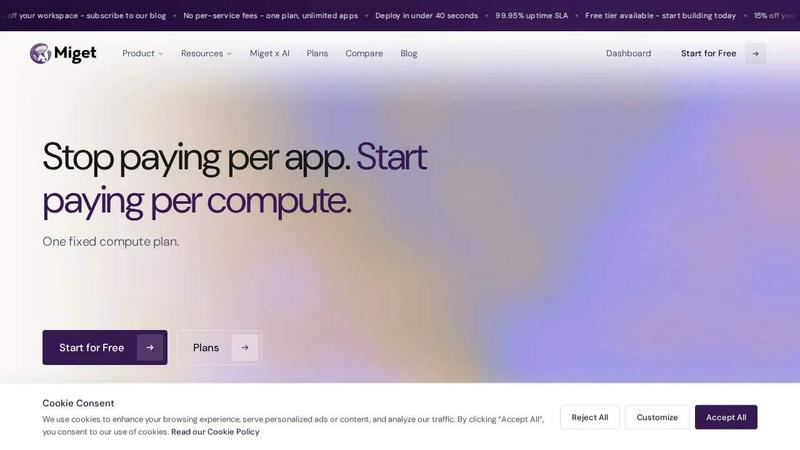
Miget – Stop paying per app. Start paying per compute.
Traditional PaaS platforms charge you for every app, database, and worker separately. Miget flips that model: pick a fixed compute plan, then deploy as many services as you want inside it.
- Unlimited apps, databases, and background workers per plan
- No per-service billing surprises
- Built on Kubernetes with full isolation between tenants
- Deploy from Git, GitHub, Registry with zero-config builds
- Managed PostgreSQL, Redis, and more
- Custom domains with automatic TLS
Whether you're running a single side project or a full production stack, you only pay for the compute you reserve—not the number of things you run on it.