
Playwriter vs qtrl.ai
Side-by-side comparison to help you choose the right product.

Playwriter
Playwriter seamlessly empowers agents to control your live Chrome browser with AI, maintaining logins and extensions for optimal performance.
Last updated: March 18, 2026

qtrl.ai
qtrl.ai empowers QA teams to scale testing with intelligent automation while maintaining full control and governance.
Last updated: March 4, 2026
Visual Comparison
Playwriter

qtrl.ai
Feature Comparison
Playwriter
Real Browser Session Access
Playwriter allows agents to work directly within your existing browser session. This means all your logins, extensions, and cookies are retained, providing a seamless browsing experience without the hurdles of bot detection or memory issues associated with headless browsers.
Full Playwright API Integration
With Playwriter, you gain access to the complete Playwright API through a single execute tool. This feature allows agents to run any Playwright code without cumbersome wrappers or schema bloat, ensuring low context usage and efficient automation workflows.
Collaborative Environment
Playwriter facilitates real-time collaboration between you and your agents. You can monitor their actions live, stepping in to solve captchas, consent walls, or other obstacles as they arise, ensuring that the automation process remains smooth and effective.
Advanced Debugger and Editor
The integrated debugger and editor enable you to set breakpoints, edit code on the fly, and intercept network requests. This powerful feature provides developers with the tools necessary to troubleshoot and optimize tasks effectively, enhancing the overall performance of your automation efforts.
qtrl.ai
Autonomous QA Agents
qtrl.ai offers autonomous QA agents that can execute instructions on demand or continuously across multiple environments. These agents operate under user-defined rules and perform real browser execution instead of simulations, ensuring the authenticity of test results and user experiences.
Enterprise-Grade Test Management
With a robust centralized platform for managing test cases, plans, and runs, qtrl.ai provides full traceability and audit trails. This feature supports both manual and automated workflows, making it ideal for organizations that prioritize compliance and auditability in their testing processes.
Progressive Automation
The platform allows users to start with human-written instructions and gradually transition to AI-generated tests. qtrl.ai intelligently suggests new tests based on coverage analysis, enabling teams to review, approve, and refine test cases at each stage of automation.
Adaptive Memory
qtrl.ai's adaptive memory feature builds a dynamic knowledge base of the application, learning from test execution, exploration, and encountered issues. This results in smarter, context-aware test generation that becomes increasingly effective with every interaction, enhancing overall testing efficiency.
Use Cases
Playwriter
Streamlined Testing Workflows
Developers can leverage Playwriter to automate browser testing without losing the context of user sessions. By enabling agents to navigate and test web applications in a familiar environment, teams can enhance testing efficiency and accuracy.
Enhanced Data Collection
Researchers and analysts can use Playwriter to automate the collection of data from various web sources. With direct access to browser sessions, agents can navigate complex websites and gather information while bypassing common barriers like captchas.
Effective User Experience Monitoring
UX teams can employ Playwriter to automate the monitoring of web applications from a user's perspective. By allowing agents to interact with websites as real users, teams can identify potential pain points and areas for improvement in the user journey.
Intelligent Automation for Marketing
Marketing teams can utilize Playwriter to automate repetitive tasks such as lead generation and web scraping. By providing agents with full access to a browser session, they can interact with online platforms efficiently, saving time and increasing productivity.
qtrl.ai
Product-Led Engineering Teams
Product-led engineering teams can leverage qtrl.ai to enhance their testing capabilities, enabling them to ship higher-quality software faster without sacrificing control over their QA processes.
QA Teams Scaling Beyond Manual Testing
As QA teams move away from manual testing, qtrl.ai provides the necessary tools to manage complex testing requirements efficiently, facilitating a smooth transition to automated workflows while maintaining oversight.
Companies Modernizing Legacy QA Workflows
Organizations looking to modernize their outdated QA practices can utilize qtrl.ai to integrate advanced automation and AI-driven insights into their existing processes, fostering a culture of continuous improvement and innovation.
Enterprises Requiring Governance and Traceability
For enterprises with strict compliance needs, qtrl.ai offers robust governance features that ensure full visibility and traceability of testing activities, helping them meet regulatory requirements with confidence.
Overview
About Playwriter
Playwriter is a revolutionary tool designed to empower AI agents by providing them direct control over your existing browser session. Unlike traditional setups where agents operate in isolated environments, Playwriter connects them seamlessly to your actual Chrome browser, complete with all your logins, extensions, and cookies. This innovative approach eliminates issues of bot detection and memory overhead, allowing agents to perform tasks as if they were you. The platform is ideal for developers, testers, and teams looking to enhance automation capabilities while maintaining human oversight. With Playwriter, you can automate repetitive tasks while still having the ability to intervene when necessary, creating a harmonious blend of human and AI collaboration.
About qtrl.ai
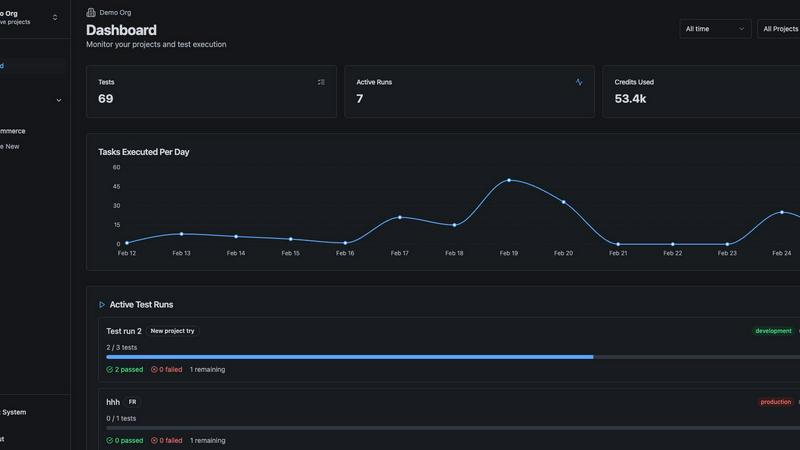
qtrl.ai is an innovative quality assurance (QA) platform designed to empower software teams by scaling their testing processes while maintaining strict control and governance. It seamlessly integrates enterprise-grade test management with advanced AI automation to create a centralized hub for organizing test cases, planning test runs, and tracking quality metrics through real-time dashboards. This structured foundation provides unparalleled visibility into testing activities, ensuring that engineering leads and QA managers can easily identify what has been tested, what is passing, and where potential risks may lie.
What sets qtrl.ai apart is its progressive approach to AI integration. Rather than imposing an abrupt, "black-box" AI-first methodology, qtrl.ai allows teams to gradually adopt intelligent automation. This flexibility enables teams to begin with straightforward manual test management before transitioning to sophisticated autonomous agents. These agents can generate UI tests from simple plain English descriptions, adapt tests as applications evolve, and execute them across various browsers and environments at scale. This makes qtrl.ai an ideal solution for product-led engineering teams, QA groups moving beyond manual testing, organizations modernizing outdated workflows, and enterprises that require rigorous compliance and audit trails. Ultimately, qtrl.ai aims to bridge the gap between the slow pace of manual testing and the complexity of traditional automation, providing a reliable pathway to faster and more intelligent quality assurance.
Frequently Asked Questions
Playwriter FAQ
How does Playwriter ensure security during browser sessions?
Playwriter operates entirely on your local machine, ensuring that no data is transmitted to external servers. The Chrome extension connects to a local WebSocket relay, which means all actions are secure and contained within your environment.
What are the system requirements for using Playwriter?
To use Playwriter, you'll need a compatible version of Google Chrome and Node.js installed on your machine. The extension and CLI can be easily installed to get started quickly.
Can I use Playwriter with other automation tools?
Yes, Playwriter is designed to work with any MCP client, including Cursor, Claude, and VS Code, allowing for flexibility in your automation setup and integration with various workflows.
Is Playwriter open source?
Absolutely! Playwriter is open-source and released under the MIT license, making it accessible for developers to contribute, customize, and enhance the tool according to their needs.
qtrl.ai FAQ
What makes qtrl.ai different from traditional QA tools?
qtrl.ai combines robust test management with a progressive AI automation approach, allowing teams to gradually integrate intelligent testing solutions without losing control. This contrasts sharply with traditional tools that often impose rigid automation practices.
Can teams start with manual testing before adopting automation?
Yes, qtrl.ai is designed for progression. Teams can begin with manual test management and then transition to automation at their own pace, ensuring a tailored approach that fits their specific needs and readiness.
How does qtrl.ai ensure the security of test execution?
qtrl.ai prioritizes security by allowing for permissioned autonomy levels and ensuring that sensitive information, such as encrypted secrets, is never exposed to AI agents during test executions.
Is qtrl.ai suitable for small teams as well as large enterprises?
Absolutely. qtrl.ai is built to scale, making it suitable for both small QA teams and large enterprises. Its flexible architecture allows organizations of all sizes to enhance their QA processes while maintaining control and oversight.
Alternatives
Playwriter Alternatives
Playwriter is an innovative tool designed for automation, allowing users to control Chrome using AI via both a Command Line Interface (CLI) and a Multi-Client Platform (MCP). This powerful solution overcomes the limitations faced by traditional AI agents, providing access to your actual logged-in browser session, complete with all extensions. Users often seek alternatives to Playwriter due to various factors such as pricing, feature sets, and compatibility with their existing platforms and workflows. When choosing an alternative, it's essential to consider the specific features that align with your automation needs, such as ease of integration, the flexibility of use cases, and the ability to support various client environments. Ensuring that the alternative offers robust support and a user-friendly interface can significantly impact productivity and effectiveness in achieving your automation goals.
qtrl.ai Alternatives
qtrl.ai is an innovative platform designed for quality assurance (QA) teams, specializing in scaling testing through AI agents while maintaining control and governance. By integrating robust test management with advanced AI automation, qtrl.ai offers a centralized hub for organizing test cases and tracking quality metrics, ensuring transparency in testing processes. Users often seek alternatives to qtrl.ai for various reasons, including pricing structures, feature sets, and platform compatibility. When evaluating alternatives, it's essential to consider factors such as ease of use, the adaptability of automation features, integration capabilities, and overall support for the specific needs of your QA team. A thorough assessment of these elements can help identify the right solution.