
Changeflow vs CloudBurn
Side-by-side comparison to help you choose the right product.

Changeflow
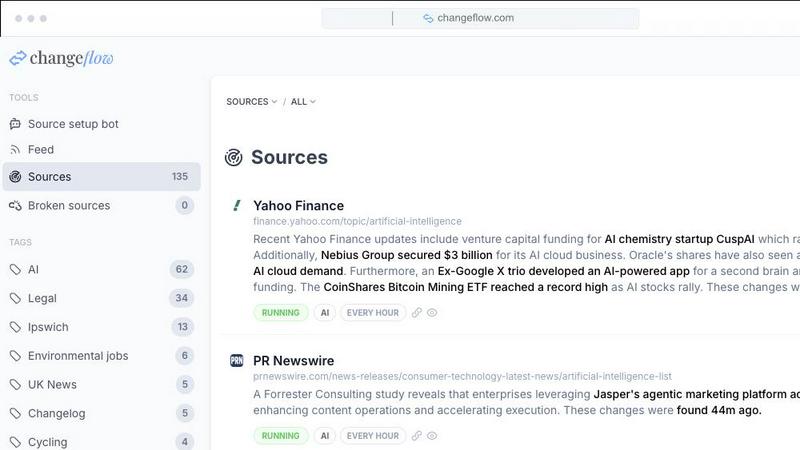
Changeflow uses AI to track critical website changes and deliver only the insights that matter to your business.
Last updated: March 4, 2026

CloudBurn
CloudBurn shows AWS cost estimates in pull requests to prevent budget surprises.
Last updated: February 28, 2026
Visual Comparison
Changeflow
CloudBurn
Feature Comparison
Changeflow
AI-Powered Contextual Intelligence
Changeflow's core AI doesn't just detect changes; it understands them. The system reads the content of a page, grasps the context, and filters out irrelevant noise like ad rotations or seasonal banners. It then generates a concise summary that explains not only what changed but why it might be significant to your stated objectives. This eliminates the frustration of false positives and saves you from manually deciphering screenshots or full-page diffs.
Natural Language Setup & Smart Link Following
Forget complex RSS feeds or manual configuration. You simply describe what you want to track in plain English. Furthermore, Changeflow can turn any page with links into a dynamic, intelligent feed. Point it at a directory, blog, or news site, and it will automatically follow new links, read the target pages, determine their relevance based on your instructions, and summarize the important content, creating a powerful automated content discovery pipeline.
Enterprise-Grade Reliability & Anti-Blocking
Built on over a decade of experience tracking billions of pages, Changeflow is engineered for business-critical reliability. Its sophisticated anti-blocking technology mimics human browsing patterns more effectively than competitors, ensuring a 99.9% success rate at accessing and monitoring even the most challenging, script-heavy websites. This guarantees consistent uptime and data delivery for compliance, legal, and competitive intelligence use cases where missing an update is not an option.
Collaborative Workspaces & Forensic Change Viewer
Changeflow is built for team scalability. Shared workspaces keep everyone aligned on the same intelligence feed. For deep analysis, the interactive Site Version Control and forensic change viewer allow you to navigate timestamped archives of any page and see exact, highlighted modifications between versions. This provides complete auditability and lets you dig into the precise details of any change that surfaces in your feed.
CloudBurn
Automated Pre-Deployment Cost Analysis
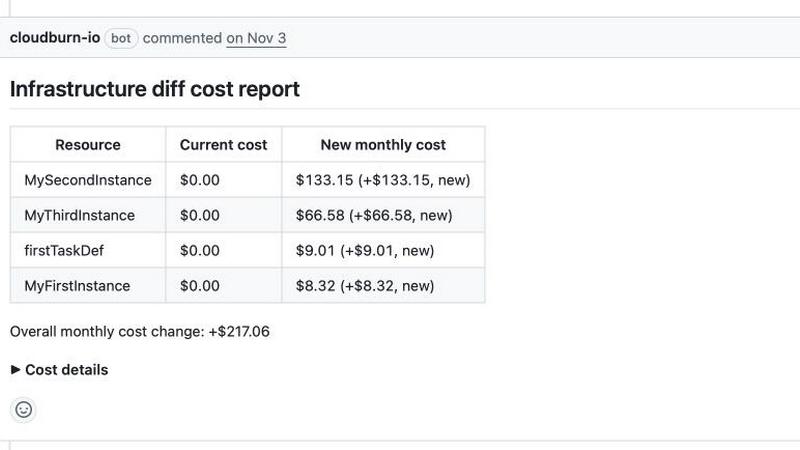
CloudBurn automatically scans every pull request containing Terraform or AWS CDK changes, generating a detailed, line-item cost report in seconds. It compares the proposed infrastructure against the current state, showing the exact monthly cost delta for each new or modified resource. This eliminates manual spreadsheet estimation and provides developers with instant, contextual feedback on the financial impact of their code, right where they work.
Seamless GitHub Integration
The platform is built for developer velocity and integrates 100% through GitHub. Setup is secure and permission-based, handled directly via the GitHub Marketplace. Once installed, CloudBurn works silently in the background, requiring no complex configuration or context switching. Cost reports appear as native PR comments, making cost awareness a natural part of the existing code review and CI/CD process without disrupting team workflow.
Real-Time AWS Pricing Data
CloudBurn pulls from the latest AWS pricing APIs to ensure every estimate is accurate and up-to-date. The analysis accounts for specific instance types, regions, and service configurations (like Fargate vCPU/memory allocations), providing precise cost calculations. This means teams can trust the numbers they see, enabling confident decision-making based on current market rates, not outdated or generalized estimates.
Proactive Cost Anomaly Prevention
By surfacing cost changes during the PR review phase, CloudBurn acts as an early warning system against budget-busting mistakes. It helps prevent costly misconfigurations—such as selecting an overly large instance type, forgetting to enable auto-scaling, or provisioning redundant resources—from ever reaching production. This proactive catch saves significant rework, avoids surprise bills, and establishes a scalable foundation for automated FinOps.
Use Cases
Changeflow
Competitive & Pricing Intelligence
Business and product teams use Changeflow to automatically track competitor websites for pricing changes, new product launches, feature updates, and promotional campaigns. By receiving instant, AI-summarized alerts, they can react strategically to market movements without manual daily checks, maintaining a competitive edge and optimizing their own pricing strategies in real-time.
Legal & Regulatory Compliance Monitoring
Legal librarians and compliance officers at top-tier firms rely on Changeflow to monitor critical sources like court dockets, SEC filings, FDA guidance documents, and regulatory agency websites. The platform ensures they are immediately notified of new filings, rule changes, or case updates with clear summaries, mitigating risk and saving countless hours of manual surveillance.
News & Brand Mention Tracking
Marketing and PR teams automate the tracking of news articles, industry publications, and forum discussions for brand mentions, executive coverage, or relevant industry trends. Changeflow follows links from news hubs, understands the context of mentions, and delivers a clean feed of significant coverage, enabling proactive reputation management and timely media engagement.
Market & Supply Chain Intelligence
Procurement, sales, and strategy teams monitor key industry reports, supplier portals, and market analysis pages for shifts in material costs, supply chain disruptions, or emerging industry standards. Changeflow provides timely intelligence on these movements, allowing businesses to anticipate challenges, seize opportunities, and make data-driven decisions faster.
CloudBurn
Enabling Developer-Led FinOps
Engineering teams can embed cost accountability directly into their development lifecycle. Developers gain autonomy and immediate feedback on their infrastructure choices, allowing them to optimize for cost-efficiency alongside performance and reliability. This shifts the FinOps model from a central gatekeeping function to a distributed, empowered practice, accelerating development while controlling spend.
Preventing Costly Deployment Mistakes
For teams managing complex, frequently changing infrastructure, CloudBurn is a critical safety net. It automatically flags high-cost changes in PRs, such as the accidental deployment of multiple t3.xlarge instances instead of t3.micros. Catching these errors pre-merge prevents them from spinning up in production and accumulating thousands in unnecessary costs before the next billing cycle.
Streamlining Infrastructure Code Reviews
Platform and DevOps engineers can enhance their code review process with concrete financial data. Instead of vague concerns about cost, reviewers can point to the exact dollar impact of a proposed change. This makes reviews more objective, data-driven, and efficient, helping teams balance architectural best practices with economic feasibility directly in the pull request conversation.
Gaining Visibility for Startups Scaling on AWS
Fast-growing startups need to scale their cloud infrastructure efficiently. CloudBurn provides clear visibility into how each new feature or service expansion will affect the monthly AWS bill. This allows founders and engineering leaders to forecast costs accurately, make informed scaling decisions, and ensure that cloud spend grows in a controlled, predictable manner alongside the business.
Overview
About Changeflow
Changeflow is the intelligent web monitoring platform that transforms how businesses track online information. It goes far beyond simple change detection by using advanced AI to read, understand, and summarize what actually changed on a webpage. Instead of getting vague alerts about "something" being different, you receive clear, contextual summaries of the updates that matter to your specific goals. The platform is built for scale and simplicity, requiring only a URL and a plain-English description of what you care about to begin tracking. It expertly handles complex technical challenges like JavaScript-rendered content, login walls, and anti-bot measures with a 99.9% success rate, reliably monitoring pages that stump other tools. Trusted by Fortune 500 and Am Law 200 firms, Changeflow empowers business, legal, and compliance teams to automate competitive intelligence, regulatory tracking, news monitoring, and market surveillance. With features like shared workspaces, a robust API, and Site Version Control for timestamped archives, it provides a centralized, actionable feed of critical web changes, saving teams thousands of hours and ensuring they never miss a pivotal update.
About CloudBurn
CloudBurn is a proactive FinOps platform engineered for modern engineering teams who build with Infrastructure-as-Code (IaC) tools like Terraform and AWS CDK. It directly tackles the all-too-common nightmare of unpredictable and spiraling cloud bills by shifting cost governance left, directly into the developer workflow. The core mission is to empower developers and platform engineers with real-time, actionable cost intelligence before code merges and deploys, transforming cloud cost management from a reactive, finance-led burden into a proactive, engineering-led practice. By seamlessly integrating with GitHub, CloudBurn automatically analyzes pull requests, calculates the precise dollar impact of infrastructure changes, and posts a clear cost report as a comment. This creates an immediate feedback loop, enabling teams to catch misconfigurations—like accidentally provisioning a dozen expensive instances—while the change is still under review. For startups and scaling companies, this isn't just about cost savings; it's about fostering a culture of financial responsibility and innovation, where every engineer has the visibility to make cost-aware architectural decisions, leading to immediate ROI and sustainable, efficient growth.
Frequently Asked Questions
Changeflow FAQ
How is Changeflow different from other website change detectors?
Unlike basic tools that simply alert you to any pixel change or HTML modification, Changeflow uses AI to comprehend the content and context of a page. It filters out irrelevant noise (like ads, stock tickers, "cookie consent" updates) and provides a plain-English summary of the meaningful changes that align with your specific tracking goals. It's also built on robust anti-blocking technology for unparalleled reliability on complex sites.
Can Changeflow monitor websites that require a login?
Yes. Changeflow's advanced technology can navigate login walls and authenticated sessions to monitor pages behind logins. This is a key feature for tracking private dashboards, member-only content, or internal portals, making it a powerful tool for competitive intelligence on gated platforms or for internal compliance monitoring.
How do I set up monitoring for a new webpage?
Setup is designed to be effortless. In the Changeflow platform, you simply provide the URL of the page you want to track and write a brief description in natural language of what kind of changes you care about (e.g., "track changes to the pricing table" or "alert me about new job postings in the engineering department"). The AI agent handles the rest, with no technical configuration required.
How does the "Smart Link Following" feature work?
When you point Changeflow at a page containing a list of links (like a blog homepage, news site, or directory), it can automatically discover and follow new links as they appear. It then reads the content of those linked pages, uses your initial instructions to judge relevance, and summarizes the important information. This effectively turns a single source page into a dynamic, self-updating feed of relevant content.
CloudBurn FAQ
How does CloudBurn calculate cost estimates?
CloudBurn calculates estimates by analyzing the infrastructure diff (from terraform plan or cdk diff) and querying the official AWS Price List API using the specific resource attributes like instance type, region, and storage configuration. It calculates the projected monthly cost based on 730 hours of usage (24/7 operation) for compute resources and applicable pricing models for other services, providing a highly accurate forecast.
What permissions does CloudBurn require on GitHub?
CloudBurn requests standard permissions to read repository contents and pull requests, and to write comments on them. This allows it to access the plan/diff output from your CI workflow and post the cost analysis report. Billing and setup are handled entirely through GitHub's secure marketplace infrastructure, so CloudBurn never stores your payment information directly.
Can CloudBurn analyze costs for existing infrastructure?
The primary focus of CloudBurn is on analyzing changes through pull requests to prevent cost surprises. It compares the proposed state against the current state to show the delta. For a comprehensive view of existing infrastructure costs, you would typically use a tool like the AWS Cost Explorer, which CloudBurn complements by preventing future cost growth.
Is there a free tier or trial available?
Yes, CloudBurn offers a Community plan that is free to use forever. They also provide a 14-day trial of the Pro plan, which includes advanced features. You can start the trial without a credit card directly from the GitHub Marketplace. This allows teams to experience the full value of automated pre-deployment cost analysis and prove its ROI before any commitment.
Alternatives
Changeflow Alternatives
Changeflow is an AI-driven market and competitor intelligence platform, part of the modern productivity and management stack. It transforms web monitoring from a chore into a strategic advantage by using AI to read pages, understand context, and deliver summaries of what actually changed, not just alerts. Users explore alternatives for various reasons, such as budget constraints, specific feature needs like deeper social media tracking, or a requirement for a platform already integrated into their existing tech ecosystem. It's a natural part of scaling a business and optimizing your toolkit. When evaluating options, focus on core capabilities: the intelligence of the change detection, the ability to handle complex modern websites, and how insights integrate into your team's workflow. The goal is to find a solution that saves time and provides a clear competitive edge, not just more data.
CloudBurn Alternatives
CloudBurn is a developer-first FinOps platform that integrates directly into the pull request workflow. It automatically estimates AWS costs for Terraform and AWS CDK changes, empowering teams to prevent budget overruns before code merges. This proactive approach to cloud cost management is transforming how scaling startups achieve financial governance. Teams often explore alternatives to find the perfect fit for their unique scaling journey. Common considerations include budget constraints, the need for support beyond AWS, or a desire for different integration points within their CI/CD pipeline. The goal is always to maintain velocity without sacrificing cost control. When evaluating other solutions, focus on core capabilities that drive growth. Key factors include the accuracy of real-time pricing data, depth of integration with your existing developer tools, and the ability to provide actionable, resource-level insights. The right tool should seamlessly foster a culture of cost-awareness without adding friction.