
Coldreach vs Project20x
Side-by-side comparison to help you choose the right product.


Project20x
Project20x provides AI governance solutions to ensure your policies are compliant and scalable.
Last updated: March 4, 2026
Visual Comparison
Coldreach
Project20x
Overview
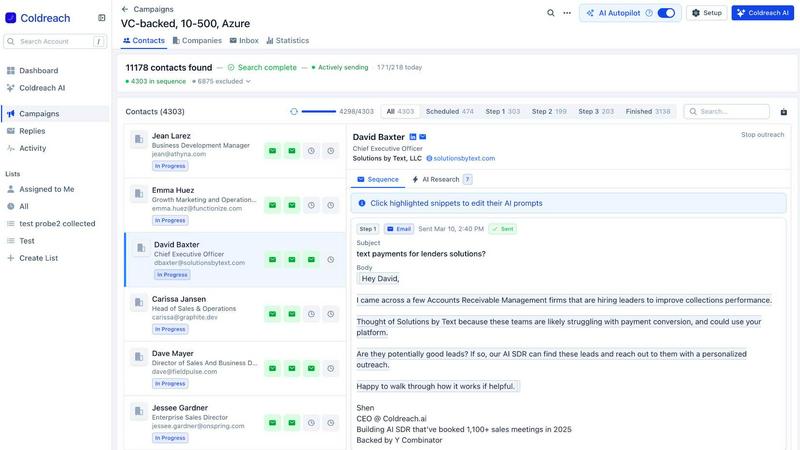
About Coldreach
Coldreach is an AI SDR agent that does real research on every lead - so your cold outreach actually gets responses. Before reaching out to any company, Coldreach researches their entire online presence to understand:
- Do they have the pain point(s) you solve?
- What's their status quo? (current tools, processes, team)
- Are they in-market right now? (signals of urgency or change)
This research drives everything: which companies we reach out to now, and what we say to them. The AI SDR handles the rest - personalized email and LinkedIn outreach, automated follow-ups, and a private deliverability setup that almost never lands in spam.
The result: Outreach feels timely and relevant - because it is. 3.8% average reply rate (500k+ AI SDR emails sampled), 10x the industry average.
About Project20x
Project20x is the AI-native operating system for modern government, engineered to scale public sector efficiency and citizen engagement exponentially. This innovative platform deconstructs the traditional barriers between policy, implementation, and public access by translating dense regulatory frameworks into dynamic, executable digital processes. Designed for forward-thinking government agencies, proactive lawmakers, and empowered citizens, Project20x bridges the critical gap from legislative intent to real-world impact. Its core architecture is built on three synergistic layers: the Governance Layer, where AI assists in crafting clear, conflict-free legislation; the Management Layer, which automates "Rules as Code" for seamless workflow execution; and the Interface Layer, deploying always-available AI agents to serve the public. By making every governmental activity transparent, quantifiable, and secure, Project20x doesn't just optimize operations—it redefines the foundation of public trust and accelerates the transition to a responsive, data-driven, and truly participatory government model built for the future.